
Motors are hungry — the battery decides how much punch your robot has. Three good options, all legal for Layer One competition:
AA battery pack
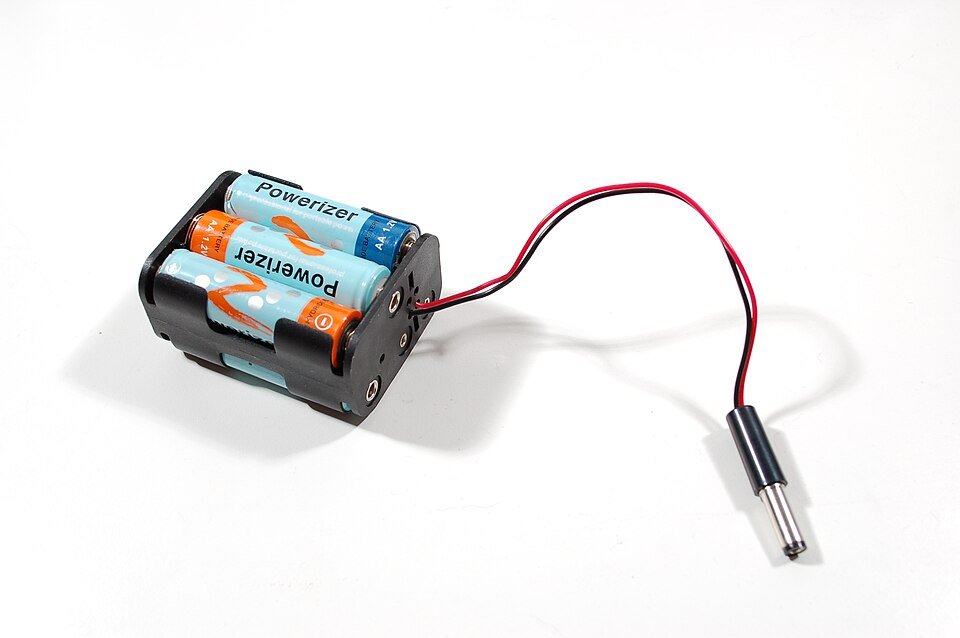
Six AAs in a holder with a plug. Charge the cells, click them in, plug the robot in — done. One rule: buy rechargeable AAs (NiMH). Ordinary alkaline AAs die fast under motor load, and you'll be buying new ones every week.
| ✅ Pros | ❌ Cons |
|---|---|
| Cheap and zero drama | Less punch than a LiPo |
| Nothing special to learn | Gets weak when motors push hard |
| Recharges on a cheap charger | Slow to recharge |
Parts list
6×AA holder with barrel plug×1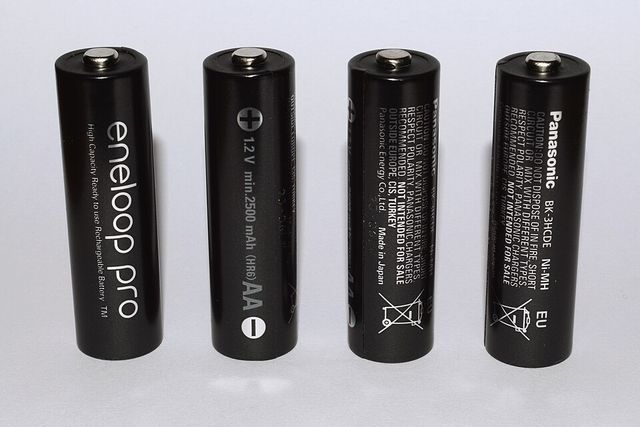 Rechargeable AA batteries (NiMH)×6
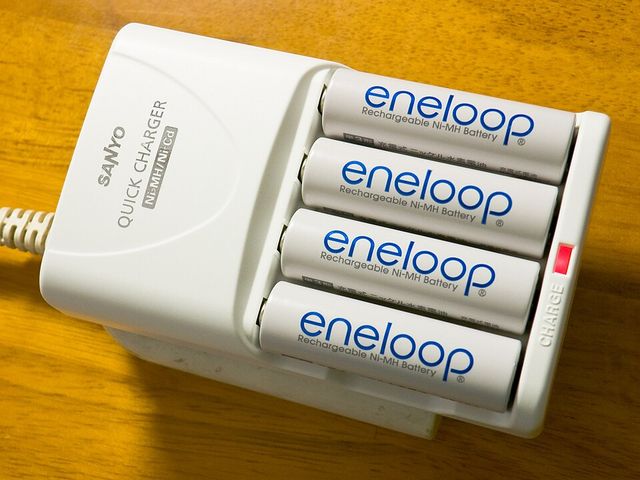 AA battery charger×1
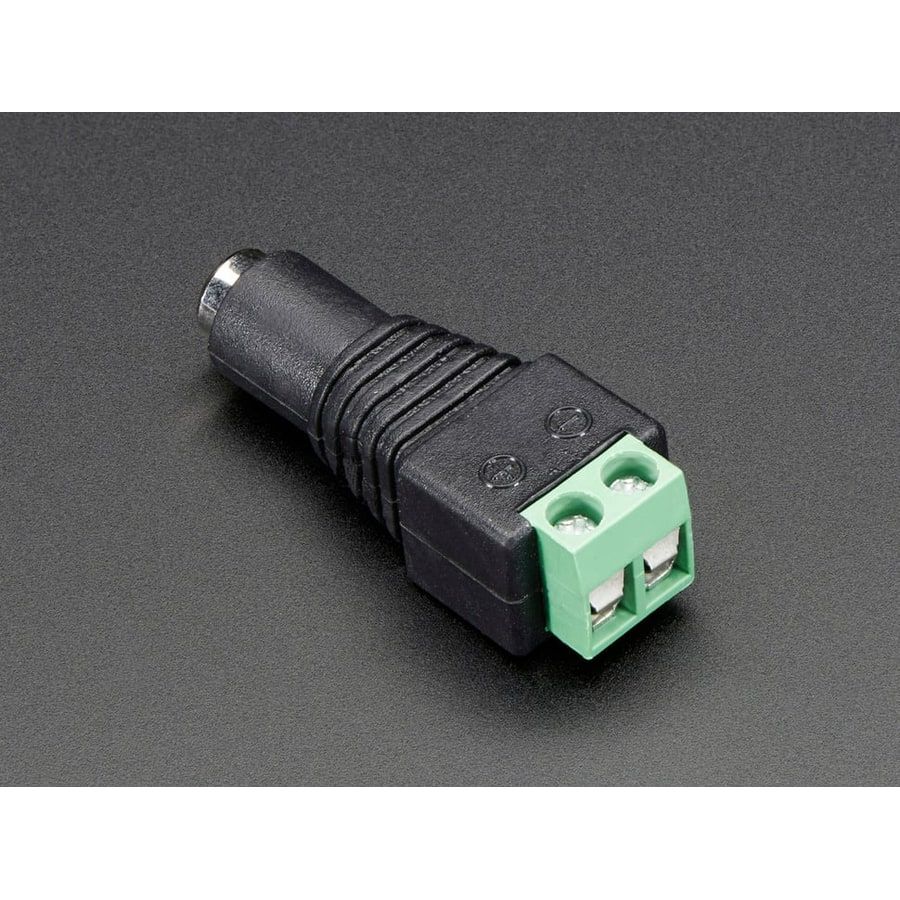 Barrel-to-bare-wires adapter×1if solder-yourself
The barrel plug goes straight into the NoU3 — no adapter needed.
18650 battery pack
Two 18650 lithium-ion cells in series make a compact 2S pack: the same nominal voltage as a 2S LiPo, with less peak current. It is a good choice for smaller robots and lighter motor loads. Buy a prebuilt 2S pack with a built-in protection board (BMS) and a barrel plug, rather than assembling loose cells. Never mix cells, use damaged cells, or charge a lithium-ion pack with a LiPo charger.
| ✅ Pros | ❌ Cons |
|---|---|
| Compact and rechargeable | Less punch than a LiPo under hard motor loads |
| 2S voltage is league-legal | Needs a protected pack and the right charger |
| Common cells with long cycle life | Not a good fit for high-current RC setups |
⚠️ Lithium-ion safety: buy a protected 2S 18650 pack from a reputable seller. Charge it only with a charger made for a 2S lithium-ion pack, never unattended, and stop using it if the pack is hot, damaged, or has exposed wiring.
Parts list
Barrel-to-bare-wires adapter×1if solder-yourselfThe NoU3 board accepts a barrel jack, so the battery's barrel plug goes straight into it. For a solder-yourself robot, use the barrel-to-bare-wires adapter and check polarity before connecting power.
2S LiPo
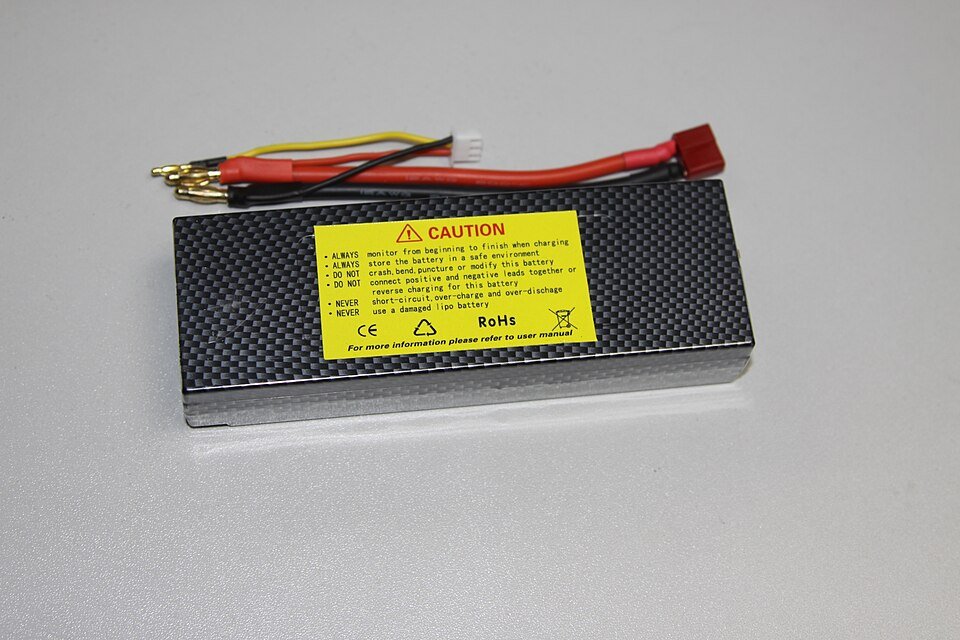
The battery RC cars race with. Much more punch than AAs, recharges in under an hour, and lasts for seasons — but it comes with safety homework. Follow the box below and it'll treat you well.
| ✅ Pros | ❌ Cons |
|---|---|
| Serious power — motors hit full punch | Needs its own charger |
| Stays strong under load | Safety rules are non-negotiable |
| Recharges fast | Ruined if you ever run it flat |
⚠️ LiPo safety, non-negotiable: charge it in the fireproof bag on a LiPo balance charger, never unattended. Never use a pack that's puffy, punctured, or crash-damaged. Keep the low-voltage alarm plugged in while driving and stop when it beeps. When you're done for the week, put the pack in the charger's "storage" mode.
Parts list
2S LiPo battery×1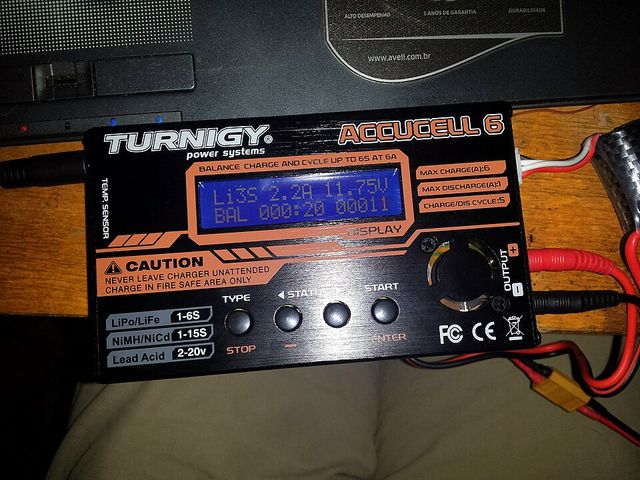 LiPo balance charger×1
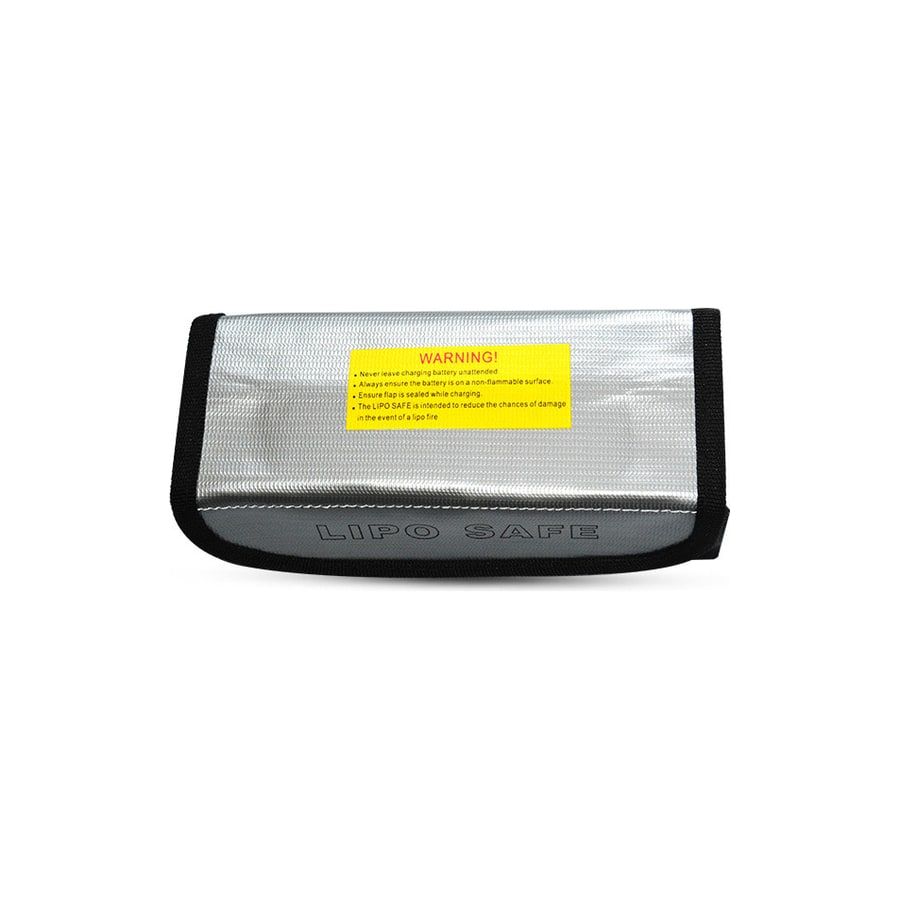 Fireproof charging bag×1
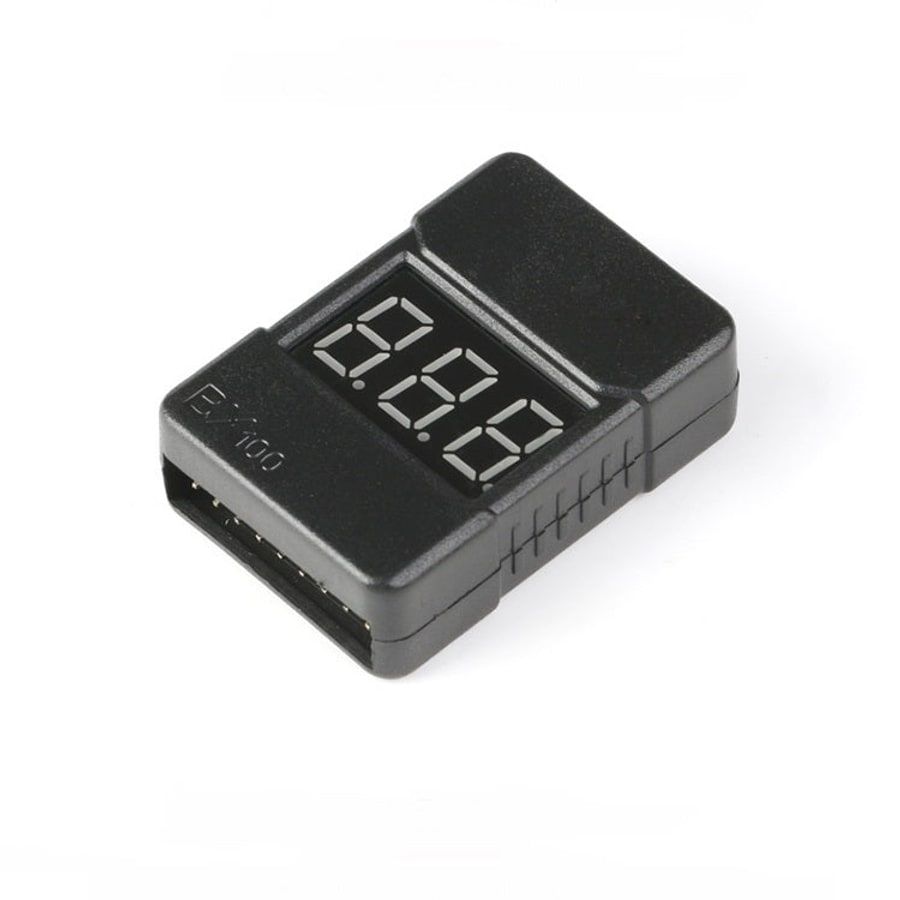 Low-voltage alarm×1
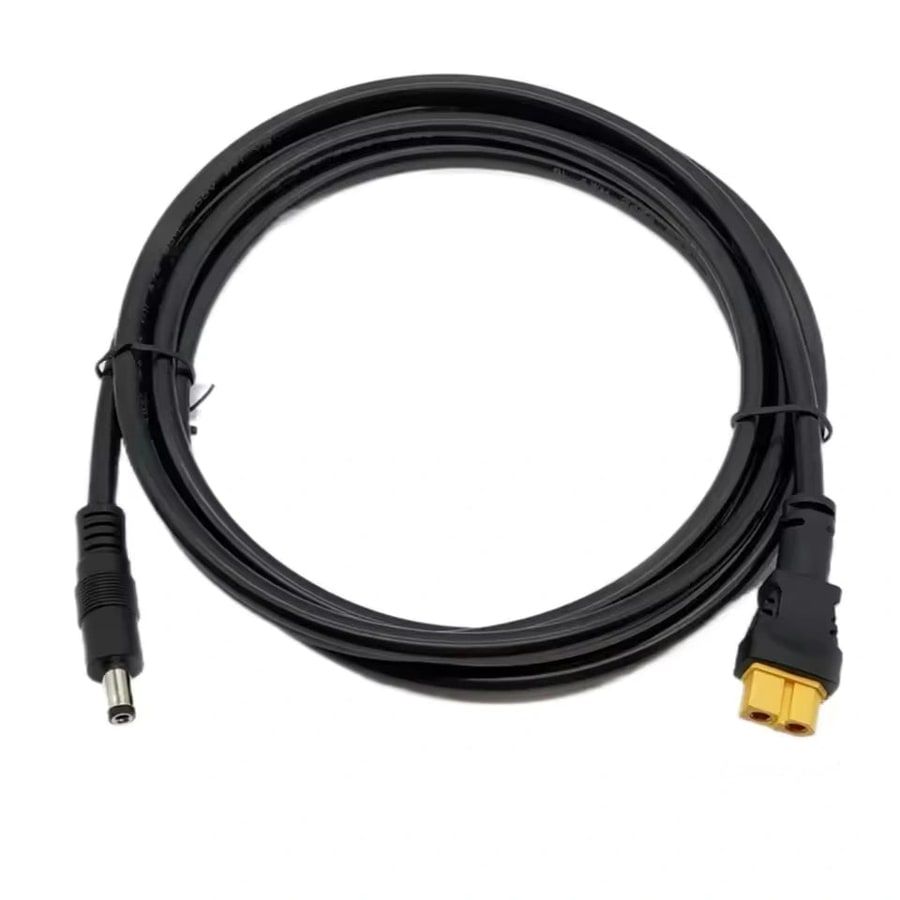 XT60-to-barrel-jack adapter×1if NoU3
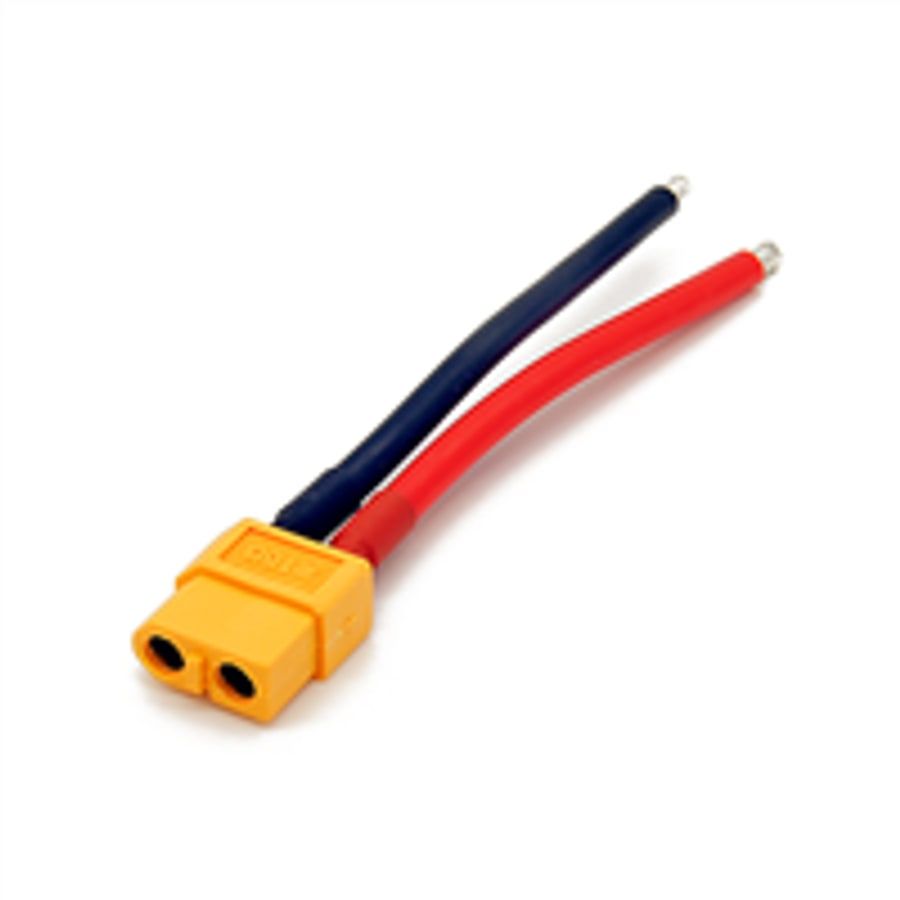 XT60-to-bare-wires adapter×1if solder-yourself
Running RC? No adapter — the pack plugs into your ESC. Just check that the plugs match (XT60 and Deans are the two common ones).
Connector names are easy to mix up. Make sure the XT60 end mates with your pack, the barrel plug is the right size for your board, and the center pin is positive. Check polarity with a multimeter before plugging in the controller.
Which should you pick?
Choose the 2S LiPo when your robot needs the most motor power. Choose a 2S 18650 pack for a compact, lower-current robot. Choose the AA pack when simple charging matters more than maximum power. Running RC? Use the 2S LiPo and check that its connector matches the ESC.
Photos via Wikimedia Commons: AA pack by Limor (CC BY 2.0), LiPo by RC Lipo battery (CC BY-SA 3.0), AA cells by Multicherry (CC BY-SA 4.0), charger by D.328 (CC BY-SA 3.0), LiPo charger by energylabsbr (CC BY 2.0). Additional product-identification images: barrel adapter from Adafruit, LiPo bag from IMEX, voltage alarm from BuddyRC, XT60-to-barrel cable from Telewire, and XT60 pigtail from mRo. Images were resized and placed on white backgrounds.